The week of July 20–26 did not produce one announcement that defines U.S. offsite construction. It produced something more useful: four signals across the system that must work together if industrialized delivery is going to scale. A new steel-fabrication venture put automation and working capital in the spotlight. Georgia publicized a multi-site modular deployment. Federal housing reporting clarified how incentives and penalties could reshape local production. And a working summit in Austin brought commissioning, finance, manufacturing, and delivery into the same room.
Read together, the developments point away from the idea that modular construction succeeds because a factory can build faster. The stronger thesis is that repeatable design, fabricated components, project finance, approvals, logistics, site readiness, and installation must behave as one production network.
1. Steel Fabrication Moves Toward a Factory Operating System
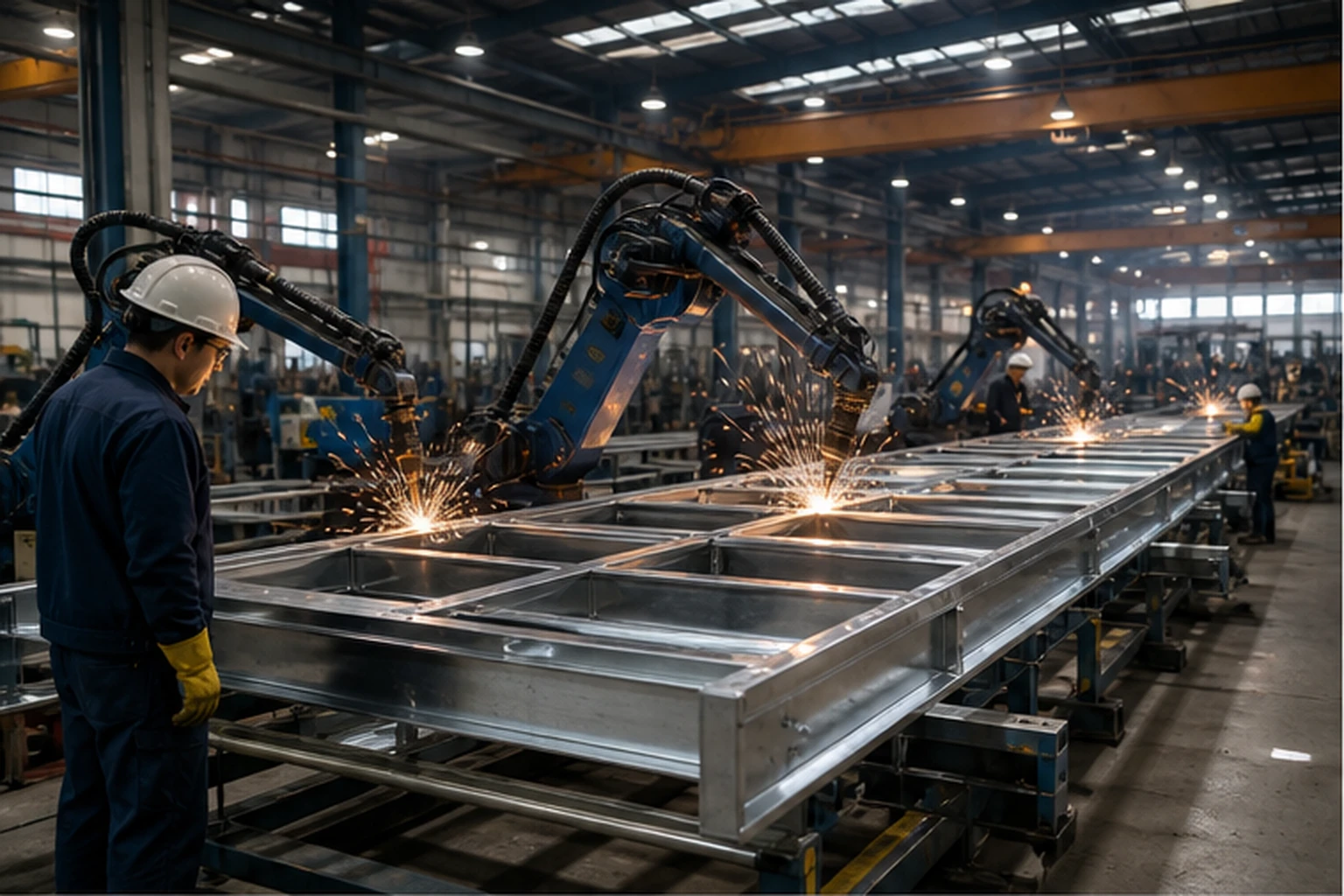
On July 22, Cincinnati-based 1872 announced a $15 million seed round and introduced an automated steel-fabrication factory model. The company was founded by three former SpaceX engineers and says its first facility in the Camp Washington neighborhood will serve as a prototype for a software-orchestrated production system.
The proposed architecture is broader than adding robotic welders to an otherwise conventional shop. According to the announcement, 1872’s Factory OS is intended to connect material purchasing, cost estimation, stock availability, production planning, machine control, robotics, and internal logistics. Path Robotics will supply adaptive robotic welding systems. Early automation is already in place, while the company describes full autonomy in 2027 as a target rather than a present condition.
This matters to modular and panelized builders because fabricated steel is often a schedule-critical input. Long lead times, variable shop capacity, late detail changes, and coordination between digital models and physical production can erase gains achieved elsewhere in the project. A closed-loop system could reduce that variability if it can reliably translate model data into traceable parts with repeatable first-pass quality.
The caution is equally important. The $15 million round finances a prototype and production launch; it does not prove the stated lead-time, yield, or cost outcomes at scale. Construction products vary, welding remains difficult to automate across changing geometries, and upstream design quality still controls downstream efficiency. The useful milestone to watch is not “autonomous factory” as a label, but measured throughput across real customer work: first-pass yield, changeover time, queue time, rework, on-time delivery, and cost per accepted assembly.
2. Georgia Shows the Value of a Repeatable Multi-Site Deployment
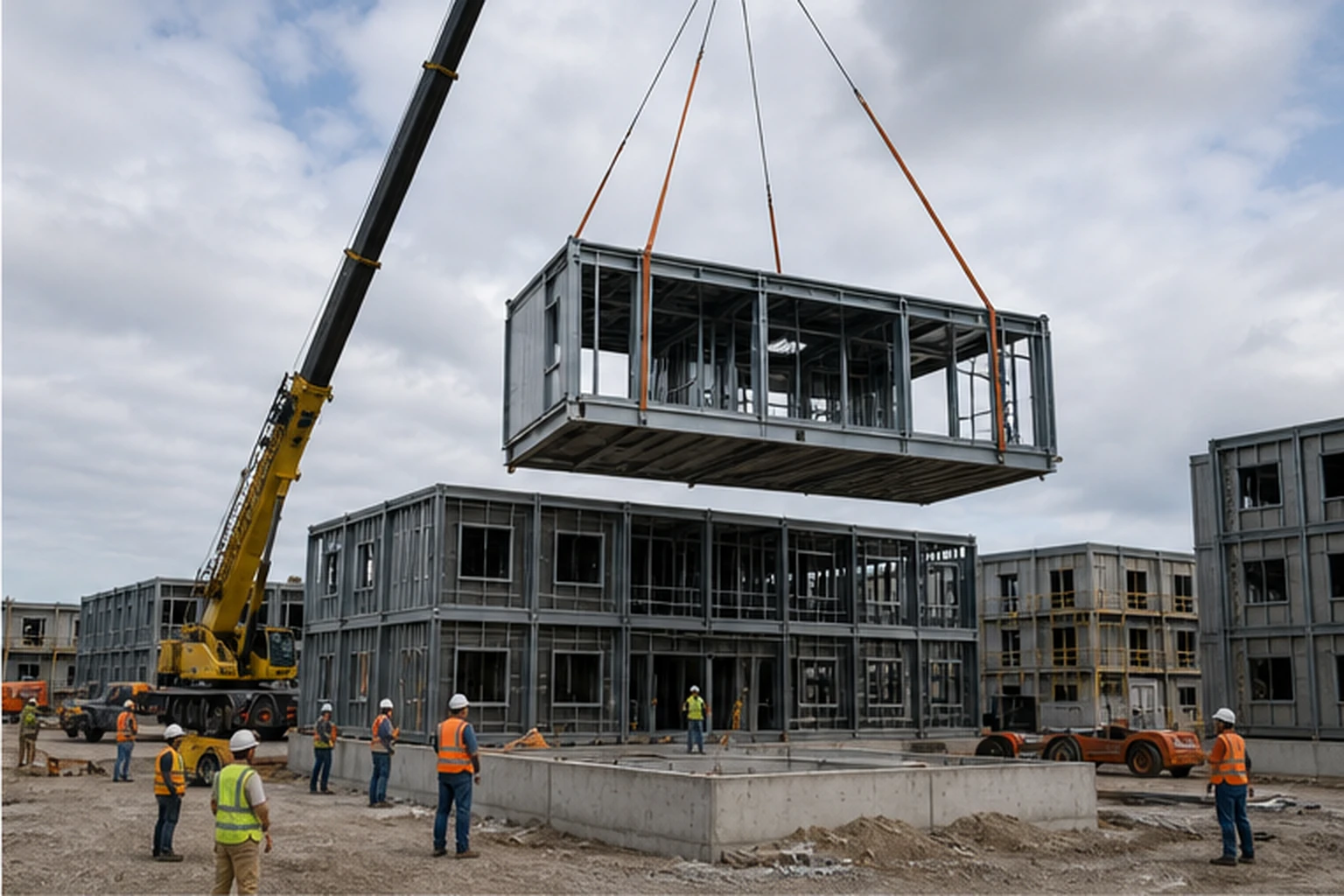
Also on July 22, the Georgia Department of Corrections announced the opening of modular units adding 524 beds across four facilities, together with a modular Medical Intensive Infirmary. The announcement is recent, but the physical delivery timeline needs to be stated accurately: supplier ModCorr reported that the final skid was placed on April 9, 2026.
ModCorr describes the program as more than 100 skids delivered in under a year, comprising eight MaxMod units and one Medical Intensive Infirmary. Those supplier figures are useful because they reveal what the headline bed count does not: the program was a portfolio of repeatable assets distributed across multiple sites, not one isolated module set.
For the broader offsite market, correctional use is less important than the delivery pattern. Multi-site programs can support design reuse, common procurement, repeatable quality plans, coordinated logistics, and lessons that transfer from one installation to the next. They also expose weak interfaces quickly. Foundations, utility connections, inspection responsibilities, transport routes, crane access, commissioning, and field completion must all be standardized enough to keep factory output moving.
The public evidence does not provide a complete comparison of cost, schedule, or lifecycle performance against a conventional alternative, so the project should not be presented as proof of universal savings. It is stronger evidence of another proposition: standardized public-sector demand can create the continuity factories need, provided owners manage the portfolio as one program rather than a series of unrelated procurements.
3. Federal Housing Policy Starts Tying Support to Production
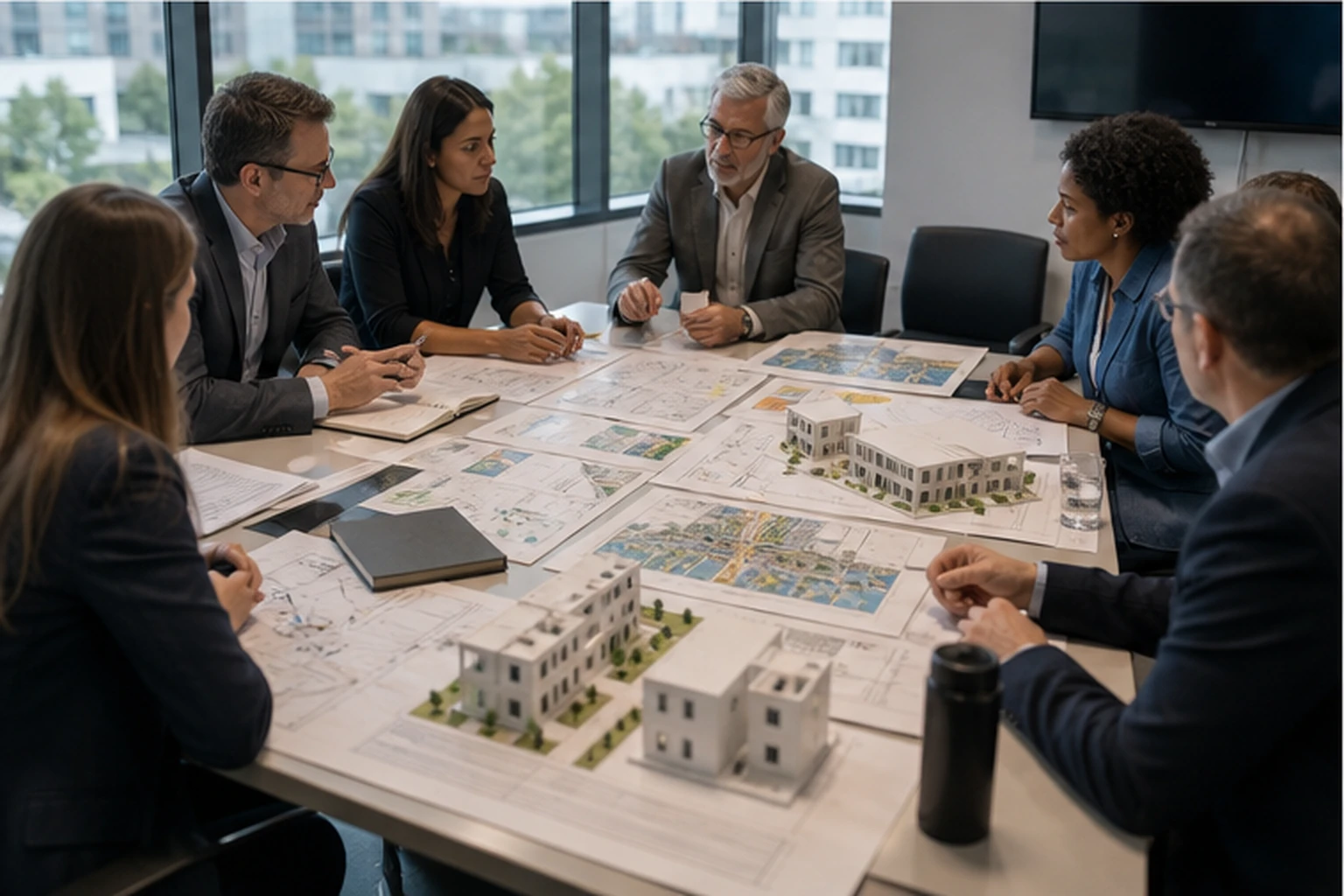
Stateline’s July 24 analysis of the newly enacted 21st Century ROAD to Housing Act clarified provisions with direct implications for local housing delivery. The law authorizes a Housing Innovation Fund offering $200 million in annual competitive grants from fiscal 2027 through 2031 to communities that demonstrate housing-supply gains through measures such as zoning changes, reduced parking requirements, denser development, or streamlined reviews.
It also changes the Community Development Block Grant program. Certain CDBG funds may now support new affordable-housing construction, capped at 20% of a recipient’s allocation. Under the Build Now provision, larger entitlement communities performing at or above the median housing-growth rate can receive bonuses, while those below the median generally face a 10% reduction. Those funding conditions are scheduled to begin in fiscal 2029, with exemptions for specified market, disaster, and legal circumstances.
This does not create an automatic pipeline for modular or steel-framed housing. Local economics, land, interest rates, tariffs, labor, and project execution still matter. It does, however, move federal housing support closer to measurable output. Communities seeking faster production will have a reason to consider repeatable plan sets, coordinated factory and site reviews, preapproved product platforms, and procurement structures that can turn multiple small sites into a bankable program.
Implementation is the risk. Stateline reported that HUD staffing funding fell 24% in fiscal 2026 while the agency is responsible for guidance on at least 35 new or updated programs and regulations. The sector should therefore watch rulemaking, appropriations, grant criteria, and review capacity—not treat statutory authorization as deployed capital.
4. Austin Puts the Delivery Chain in One Room
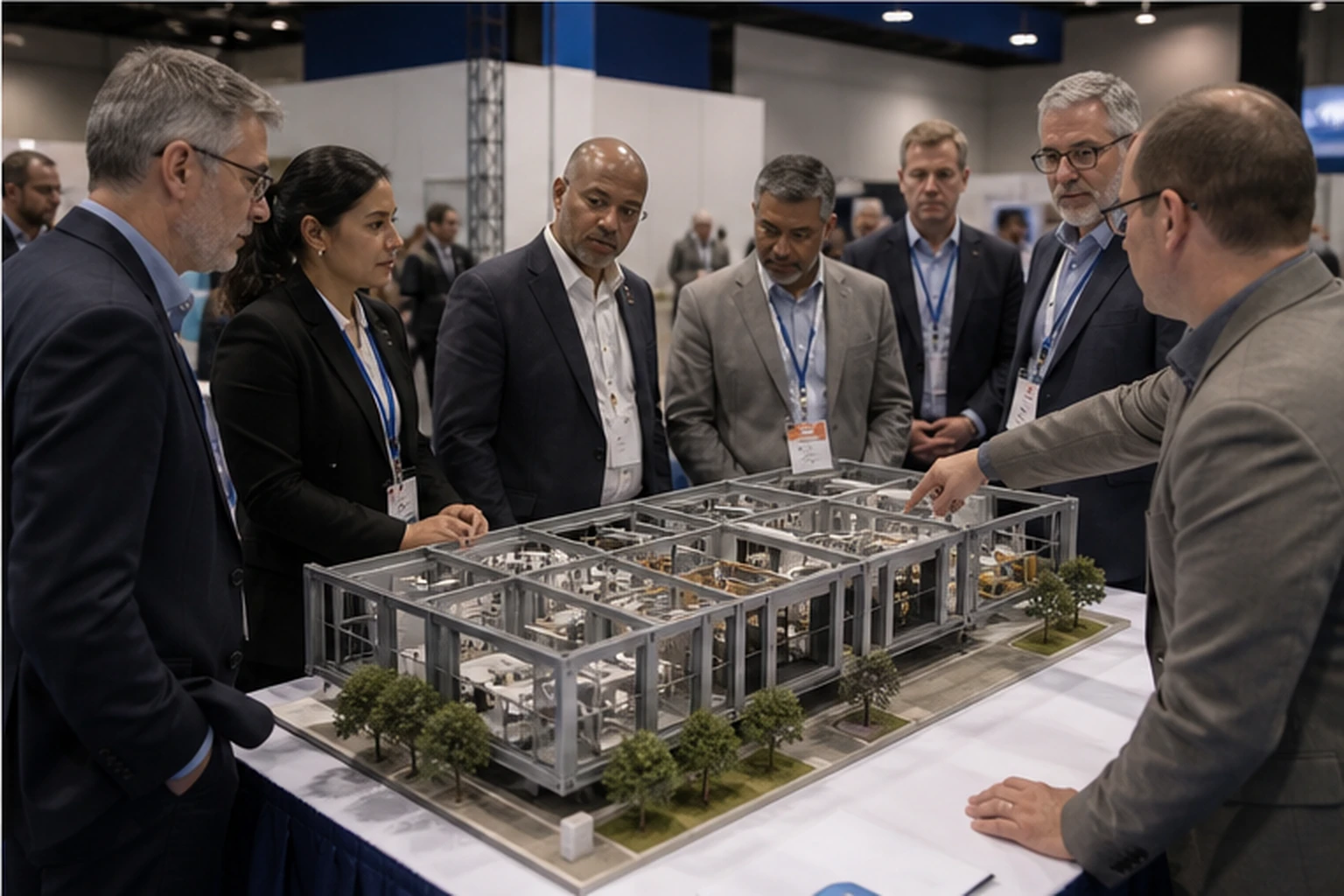
The 2026 Texas Industrialized Housing Summit, held July 23–24 at the University of Texas at Austin, was structured as a working meeting for owners, developers, manufacturers, builders, capital providers, operators, and public-sector leaders. The event was organized around the people who commission, finance, manufacture, and deliver industrialized projects rather than around factory technology alone.
That participant mix is itself an industry signal. Many offsite failures occur between organizations: a lender does not recognize value created in a factory; a design reaches the manufacturer too late; a local reviewer and a factory inspector divide scope differently; a site misses its set date; or a procurement package transfers risk without assigning control.
The event listing also noted planned participation by NAVFAC and the Air Force Civil Engineer Center to discuss the Industrialized Construction Barracks Program. Government portfolios can be valuable proving grounds because they can aggregate demand and standardize requirements across repeated assets. The same discipline applies to housing, healthcare, education, hospitality, and disaster recovery: program-level planning is more likely to create stable factory flow than one-off bidding.
What the Four Signals Mean Together
The week’s developments span different markets, but they converge on a common operating model:
- Digitize the component supply chain. Model-to-machine steel fabrication can improve predictability only when design data, purchasing, production, and quality records remain connected.
- Aggregate projects into programs. A multi-site pipeline supports standardization, procurement leverage, and continuous learning better than disconnected single projects.
- Reward installed outcomes. Policy incentives tied to housing production raise the value of systems that can repeat approvals and shorten the path from funding to occupancy.
- Coordinate commercial interfaces early. Owners, lenders, designers, manufacturers, inspectors, logistics providers, and installers need shared milestones before production begins.
For steel-framed offsite construction, this is a constructive direction. Steel components are well suited to digital detailing, automated cutting and welding, dimensional control, and repeatable connection strategies. But material choice does not remove system risk. The project still has to freeze decisions early, protect thermal and moisture performance, coordinate services and penetrations, manage transport loads, and arrive at a ready site.
The Metric to Watch Next Week
The most important industry measure is becoming less glamorous and more operational: conversion from announced capacity to installed, accepted buildings. Capital raised, modules shipped, programs authorized, and conferences held are leading indicators. Occupied units, verified schedule gains, full installed cost, quality at turnover, factory utilization, and repeat orders are the outcomes.
That is the practical lesson of July 20–26. U.S. offsite construction is developing the pieces of a more industrial delivery system—automation, programmatic demand, policy incentives, and cross-functional coordination. The opportunity is real, but it will be captured by teams that connect those pieces into a repeatable flow rather than celebrate each one in isolation.